Prototype chaining in JavaScript
In this chapter, we will explore the inner workings of JavaScript objects. By the end of this chapter, you will have a thorough understanding of JavaScript objects, including the concepts of __proto__ and prototype chaining in JavaScript.
Let's create an object by inheriting from Object.prototype.
const person = Object.create(Object.prototype);
person.name = 'Deepak';
The person object extends from the Object.prototype object.
Let's explore the structure of this simple object for better understanding.
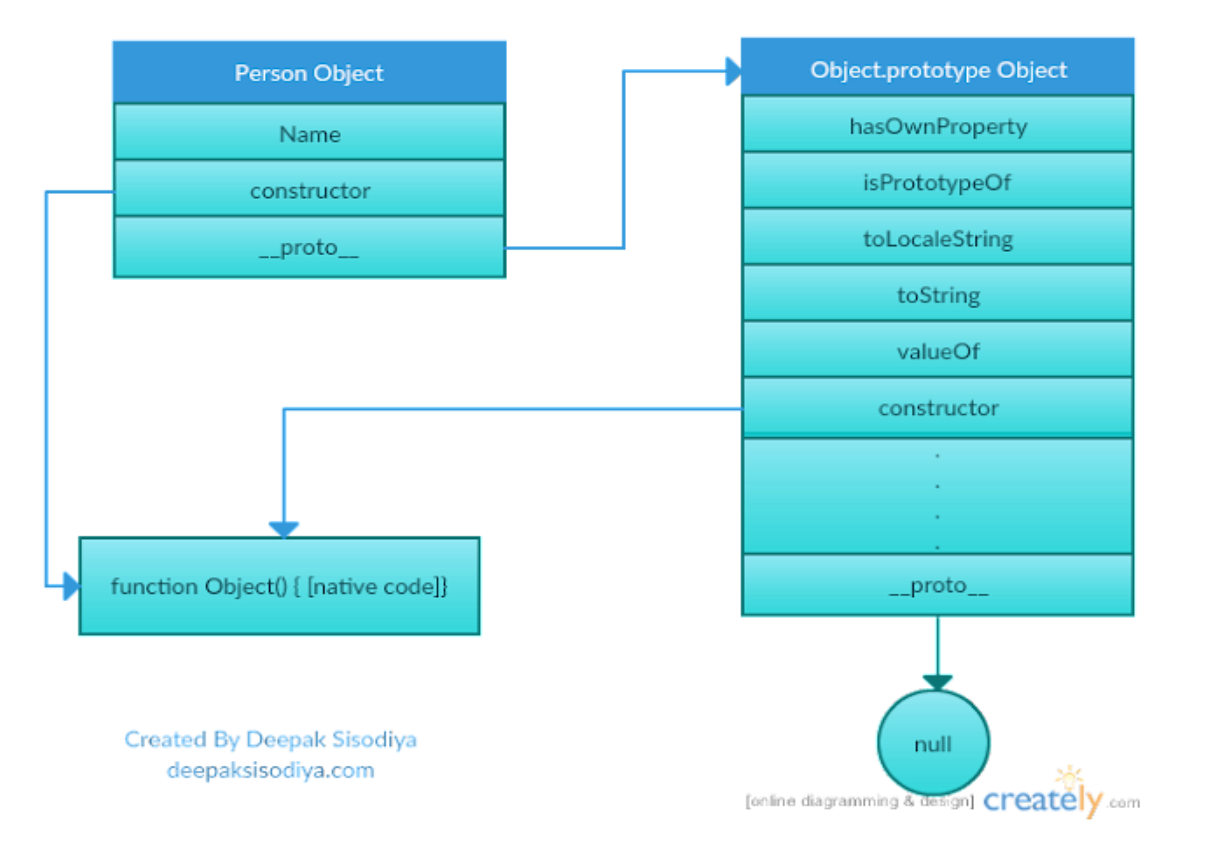
In the image provided, you can observe the structure of the person object. It is depicted that the person object extends from the Object.prototype object.
The __proto__ property serves as a link between objects. It allows an object to access and inherit properties and methods from its prototype object.
Prototype chaining
When attempting to access a property in an object, JavaScript first checks the object itself. If the property is not found, it continues the search in the object.__proto__ (the prototype of the object). If the property is still not found, it moves up the prototype chain to object.__proto__.__proto__ and continues this process until it either finds the property or reaches the end of the prototype chain, which is represented by null. This mechanism of traversing the prototype chain to find properties is known as prototype chaining in JavaScript.
The longer the prototype chain, the longer the access time.
var person = { name: "Deepak" };
person.hasOwnProperty('name');               // true
In this scenario, the person object is accessing the hasOwnProperty() method through prototype chaining. When person.hasOwnProperty is invoked, JavaScript first checks if hasOwnProperty is directly available within the person object. If it is not found, JavaScript continues the search in the prototype chain by examining the person.__proto__. Since hasOwnProperty exists in the Object.prototype object, the method is successfully executed.
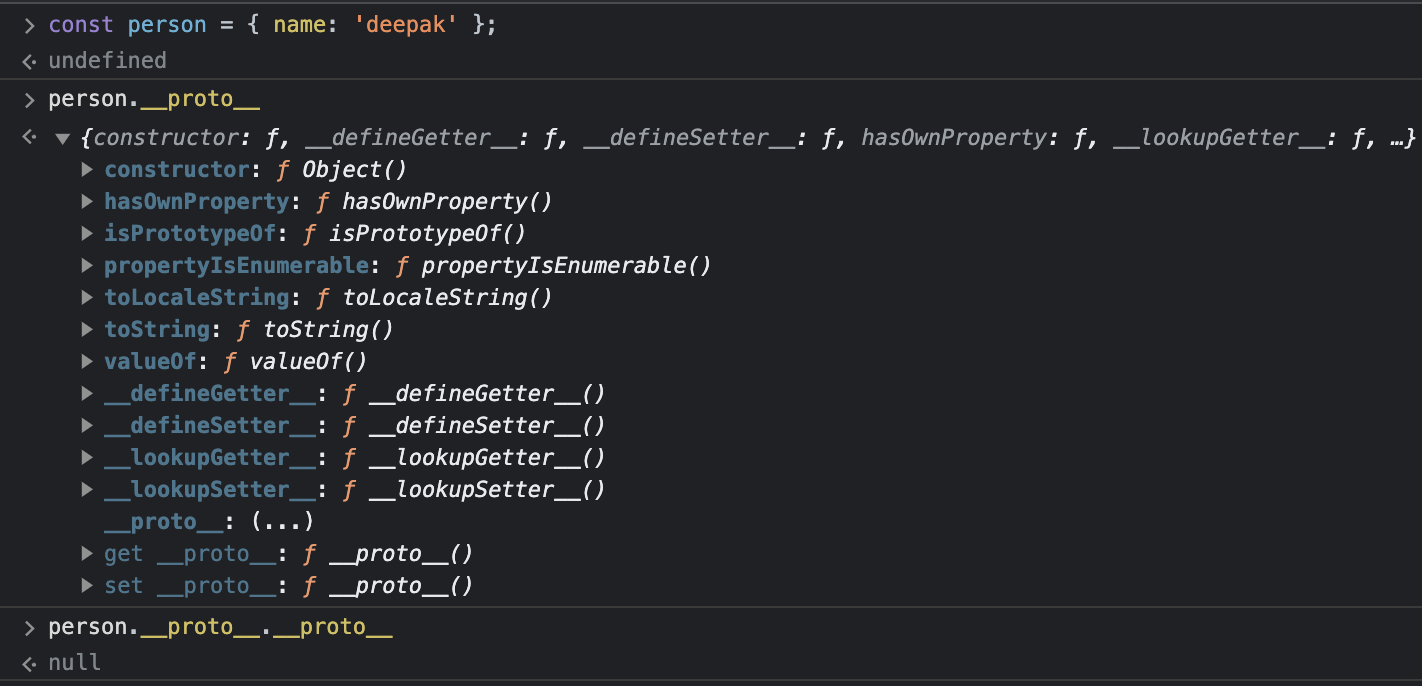
In the provided image, it can be observed that person.__proto__ returns the Object.prototype object.
Modern note
This chapter uses __proto__ because it's the most direct way to talk about the prototype slot — you can see and trace the chain. In production code, prefer the standard accessors:
Object.getPrototypeOf(person)instead of readingperson.__proto__Object.setPrototypeOf(person, proto)instead of assigningperson.__proto__Object.hasOwn(person, 'name')instead ofperson.hasOwnProperty('name')— safer when the object has a property namedhasOwnProperty, or was created viaObject.create(null)and has no prototype chain at all
Object.create(Object.prototype) and {} produce equivalent objects. The long form is used here only to make the prototype relationship explicit.